Enzymes for bun, roll and sandwich bread lines: soft after cooling, steady through make-up
Bun and roll plants live with tight make-up, proofing, cooling and bagging windows. When buns harden as they cool, dough sticks at the moulder or one batch differs from the next, the cost shows up as rejects, giveaway and returns from trade.
Enzymehouse supplies enzymes to industrial bun, roll, sandwich bread and pan loaf plants, and to the improver blenders and distributors who serve them.
Wholesale and bulk supply for manufacturers and resellers. Tell us your products, the line problem, the quantity you expect to buy and the destination country, and we will come back with a quote. Pack format and terms are quoted per order. Request a quote
Why packaged buns stay soft for days, and home-style ones do not
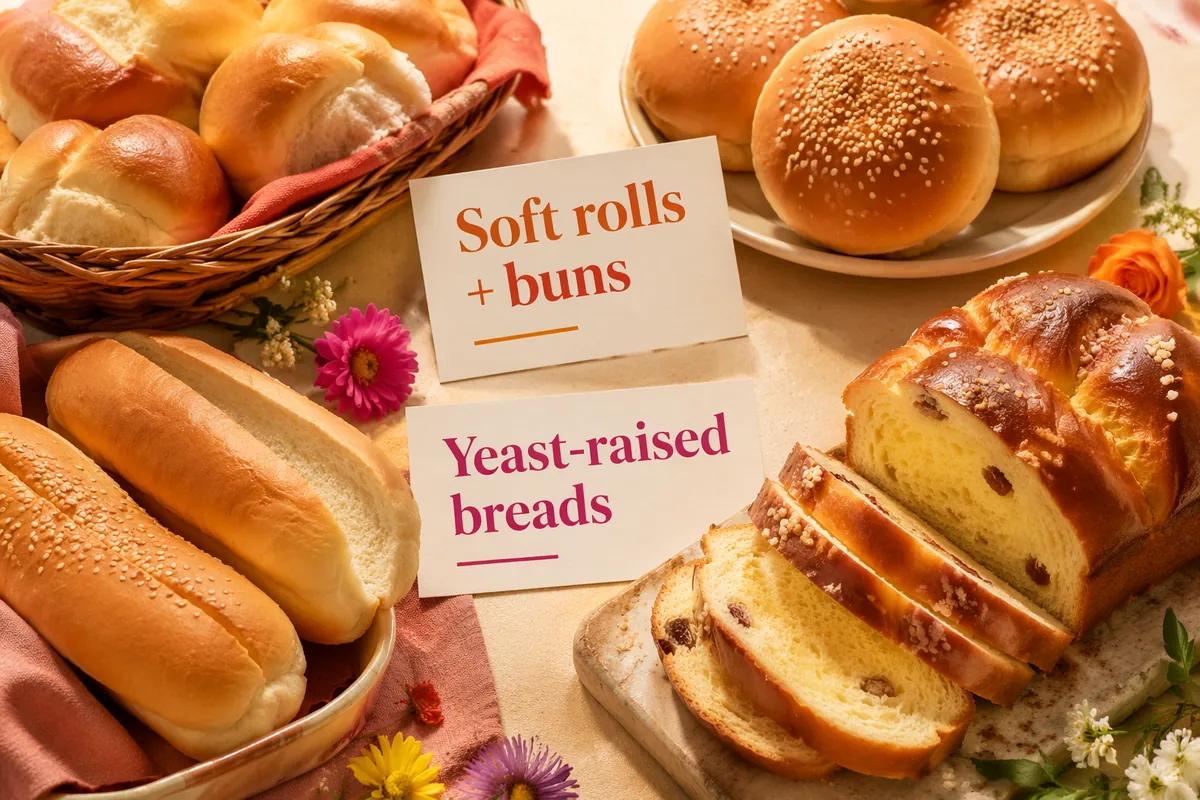
Packaged bread, buns and toast from a supermarket can sit for two or three days and still be soft, while the same product made at home is dry and hard the next day. Much of that gap comes from xylanase, which plants use in bread, steamed buns, toast and cakes. It breaks down the coarse polysaccharides in flour and relaxes the gluten structure, so the dough becomes finer and lighter and the crumb is soft but still has bite. It holds water in the product, which is what stops buns and loaves from hardening, drying out and shedding crumbs as they cool. It is stable, fits a wide range of baked and steamed products and does not change the flavour; it only changes the texture. It is made by microbial fermentation and counts as a processing aid: most of it is inactivated during baking or steaming, and very little remains in the finished product.
On a mass-production bun or roll line, the problems it addresses are sticky dough, batch-to-batch variation, rough texture and bread that ages fast after packing. The outcomes are a larger volume, finer air cells, a softer and more elastic crumb, better water retention, slower ageing and a longer shelf life, with no residue left for the label.
| Bun and roll line issue | What the enzyme changes |
|---|---|
| Buns harden and shed crumbs as they cool | Water held in the crumb |
| Sticky dough at make-up | Dough handling |
| Rolls differ from batch to batch | Steadier batch quality |
| Coarse, rough crumb | Finer air cells and a smoother texture |
| Short life after packing | Slower ageing and a longer shelf life |
Common line challenges
| Line challenge | Practical enzyme objective |
|---|---|
| Flour strength variation | Improve dough tolerance and processing consistency |
| Sticky or slack dough | Cleaner handling through make-up and transfer |
| Low or uneven volume | Better gas retention and oven spring |
| Fast crumb firming | Softness retention and anti-staling |
| Slicing damage | Crumb resilience and slice integrity |
| Bun collapse or poor shape | Structure, hinge quality and uniformity |
| High reject rates | Less waste from handling, volume, crumb and slicing defects |
Every line is different
A bun plant with high-speed moulding has different pressure points than a sandwich bread line focused on fine crumb and slicing strength. A soft roll line may need softness and resilience, while a pan bread line may put crown stability and uniform slices first. So we start from your process conditions:
- Flour type and variation risk
- Dough temperature and mixer intensity
- Fermentation time and proof tolerance
- Line speed and make-up stress
- Oven profile and product shape
- Cooling time before slicing or packing
- Shelf-life and softness targets
- Where rejects come from
How we work with your team
- Review of product type, flour, process flow and quality targets
- Trial planning across mixer, divider, proofer, oven, cooling and slicing
- Side-by-side evaluation against your current formula
- Scale-up from pilot work into full production
- Clear comparisons for procurement teams reviewing supplier options
Request a quote
Use the on-site form and include:
- Product: buns, rolls, sandwich bread, pan bread or soft loaves
- Problem: dough handling, volume, softness, slicing or waste
- Quantity: production scale, number of shifts or approximate monthly use
- Destination: the country you need it delivered to
- Timing: any trial date or procurement deadline
Wholesale and bulk supply for bun, roll and bread plants, improver blenders and distributors. Request a quote


