Improver blending for industrial bread lines: choosing enzymes by dough problem
An improver is asked to solve several problems at once: flour variation, dough tolerance, fermentation timing, volume, crumb softness, slicing and shelf life. Enzymes are the most flexible part of that system because they work inside the dough process.
This page is for improver and premix manufacturers, in-house blending teams at bread plants, and distributors who supply them. Enzymehouse supplies single-function enzymes and blend-ready systems for this work.
Wholesale and bulk supply for manufacturers and resellers. Tell us the functions your blend needs, the quantity you expect to buy and the destination country, and we will come back with a quote. Pack format and terms are quoted per order. Request a quote
Why improver makers work with compound enzyme systems
A compound enzyme preparation puts several enzymes into one system, so one addition can handle more than one dough problem. For flour products the outcomes blenders build for are better dough extensibility and structure, a better crust colour and aroma, and a longer shelf life. The same compound approach is used well beyond bakery, in starch, protein, juice and feed processing, so the blending logic is mature even where the bread application is new to your plant. The enzymes that go into these systems include amylase, xylanase, hemicellulase, cellulase, lipase, glucose oxidase, lipoxygenase, transglutaminase and protease.
The commercial reason to move an improver toward enzymes is the label. Enzyme preparations give a better crumb structure, a larger loaf and better dough workability, and they let the formula carry less fat and sugar, all without chemical additives. Lipase, amylase, xylanase, glucose oxidase, lipoxygenase, transglutaminase, protease and asparaginase are the families used for that clean-label work.
| What your improver customer asks for | Function to build into the blend |
|---|---|
| Dough that stretches without tearing | Extensibility and structure |
| Better crust colour and aroma | Colour and aroma development |
| Longer saleable life | Shelf-life extension |
| Larger loaf, finer crumb | Volume and crumb structure |
| Less fat and sugar on the label | Enzyme functions in place of chemical additives |
Start with the line problem, not the ingredient list
Before choosing enzymes, define the main issue clearly:
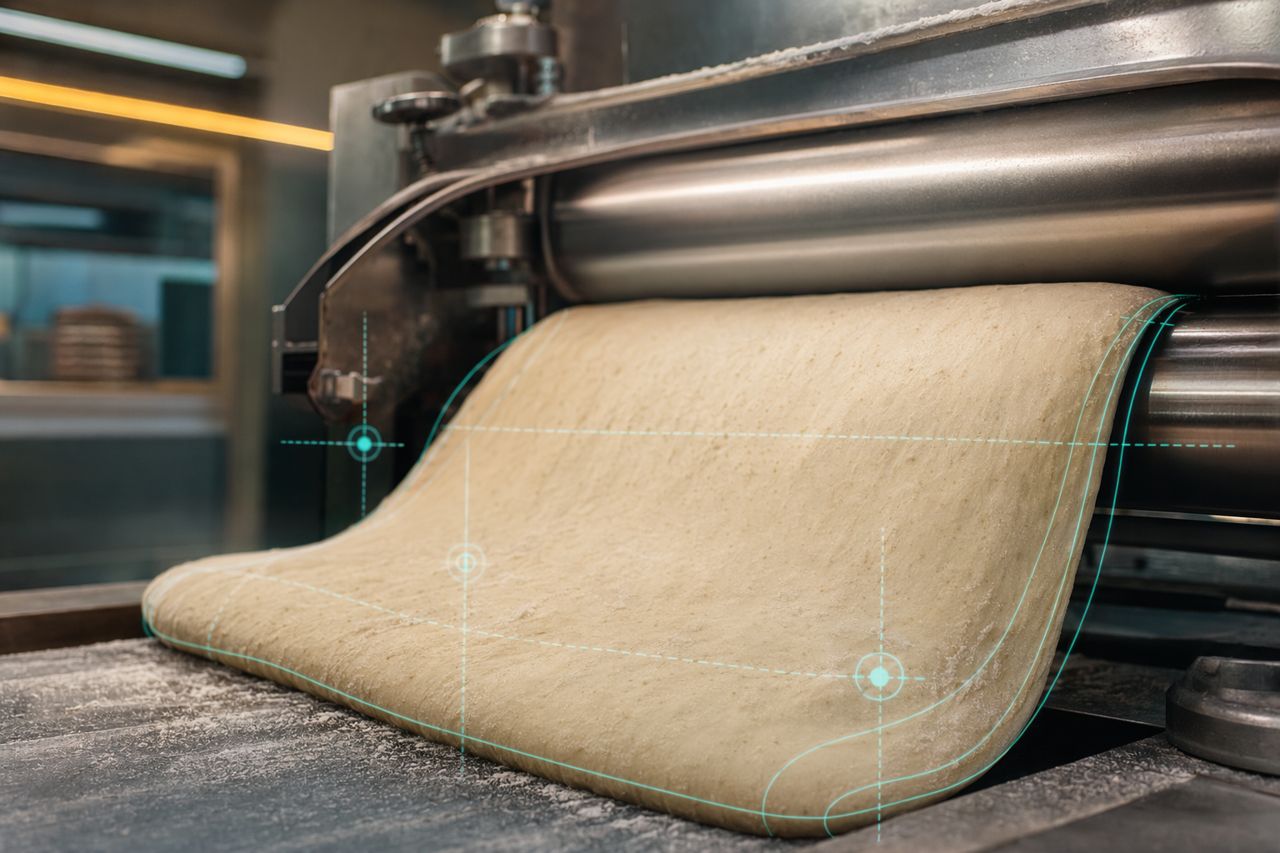
- Is the dough too sticky at the divider?
- Is proof tolerance too narrow?
- Does volume change by shift?
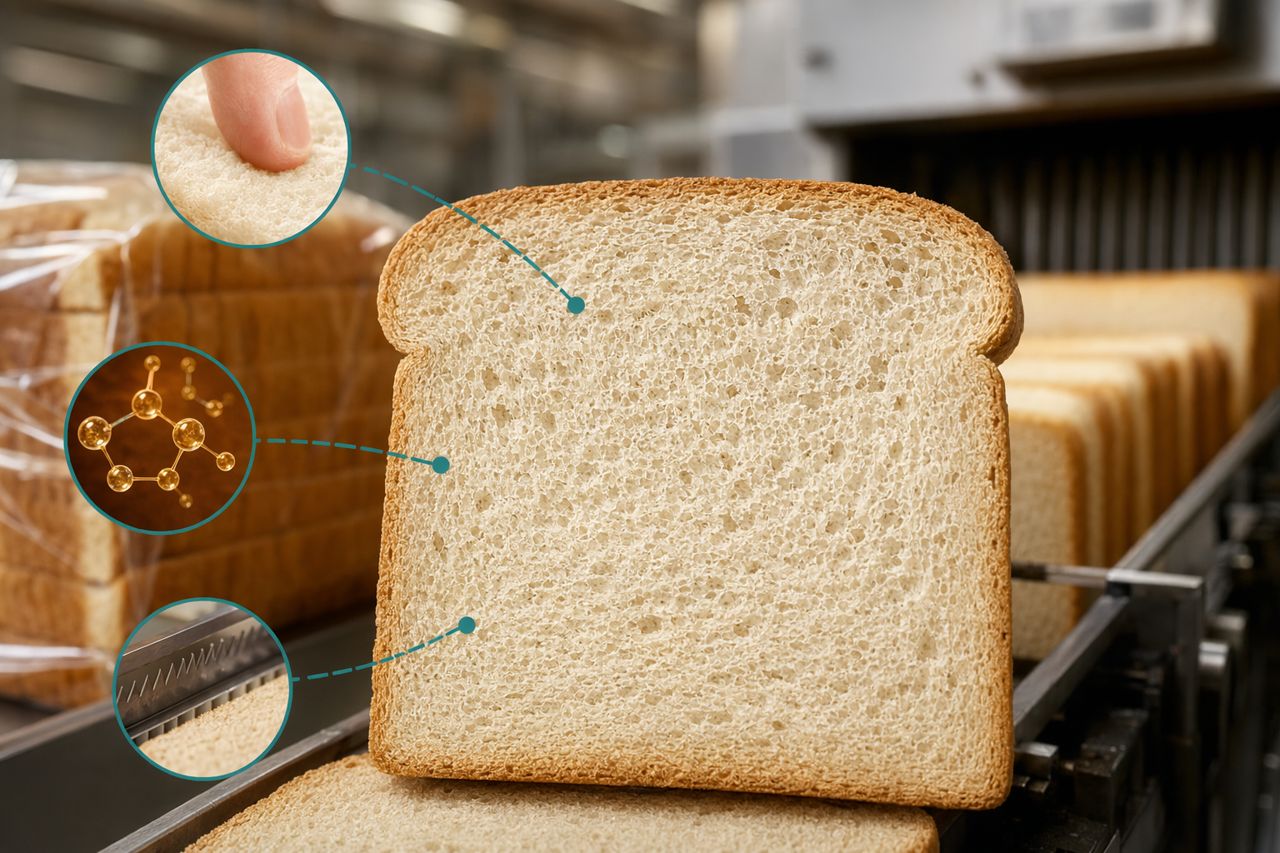
- Is the crumb firming too quickly?
- Are slicing rejects rising?
- Is flour variation forcing operators to adjust the line?
Build for balance, not maximum effect
More enzyme is not better bread. Over-correction can give sticky dough, weak structure, gummy crumb, poor slicing or uneven volume. The target is controlled performance: enough function to improve dough and finished bread, without new problems on the line.
A practical selection looks at:
- Flour variation history
- Mixer energy and water absorption targets
- Fermentation time and proof conditions
- Line speed and dough stress points
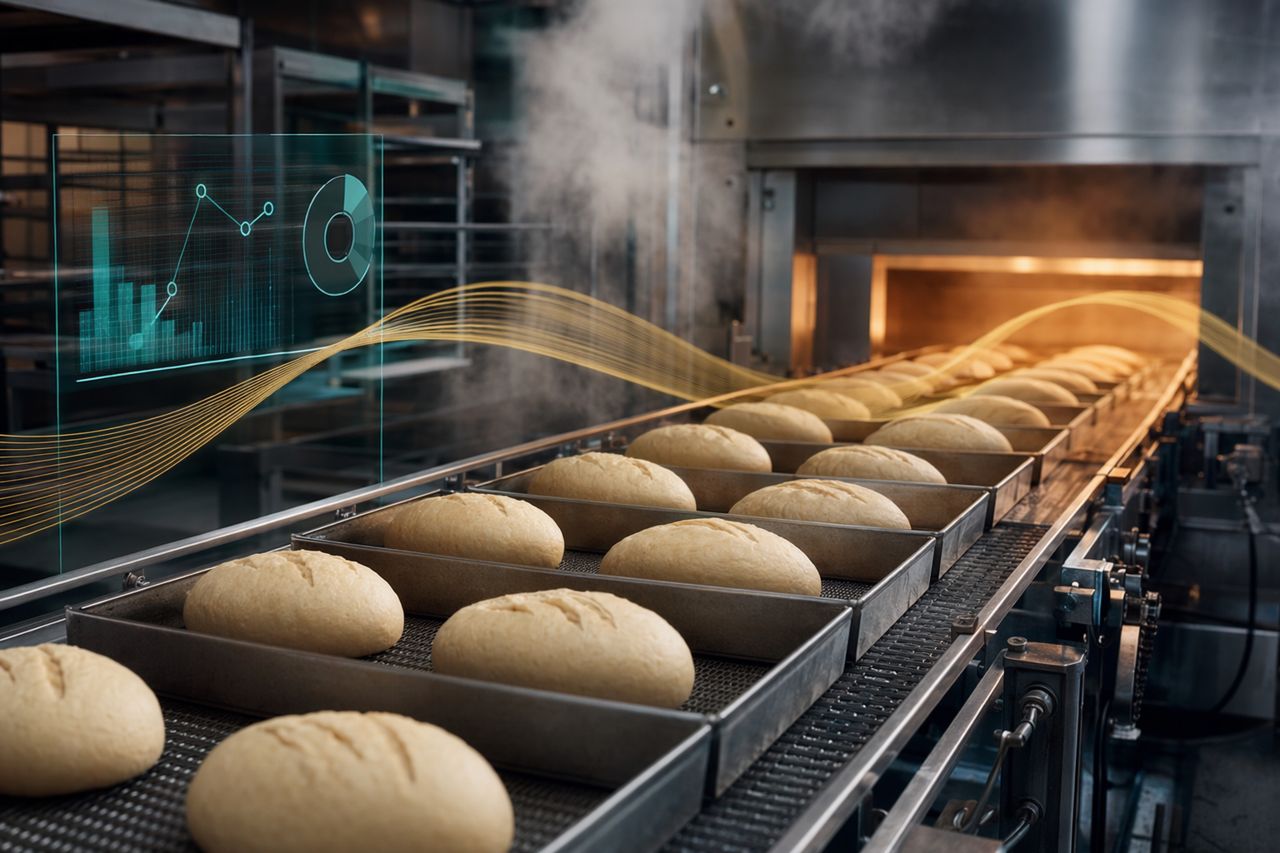
- Oven profile and product format
- Packaging timing and distribution route
Line-trial plan
- Baseline production with the current improver
- Controlled comparison with the proposed enzyme change
- Dough observations at mixer, divider, moulder, proofer and panner
- Baked loaf checks for volume, symmetry, crust and crumb
- Slicing and bagging after cooling
- Softness and eating quality over the intended shelf life
- Waste and rework against normal production records
Request a quote
Use the on-site form and send:
- Product: the bread types the improver serves and the functions you need (handling, proof tolerance, volume, softness, slicing)
- Quantity: approximate monthly volume or the size of your first order
- Destination: the country you need it delivered to
- Stage: development, plant trial, reformulation or scale-up
You do not need a perfect technical brief; a clear description of the line problem is enough to start. Wholesale and bulk supply for improver manufacturers, bread plants and distributors. Request a quote